IMG_0001 can occur repeatedly in a photo archive: after a counter reset, on a second camera or in another year. A repeated name does not mean that the files are identical. A naming rule should avoid collisions while preserving the relationship between the original, an edited version and an exported copy.
Decide what belongs in the name
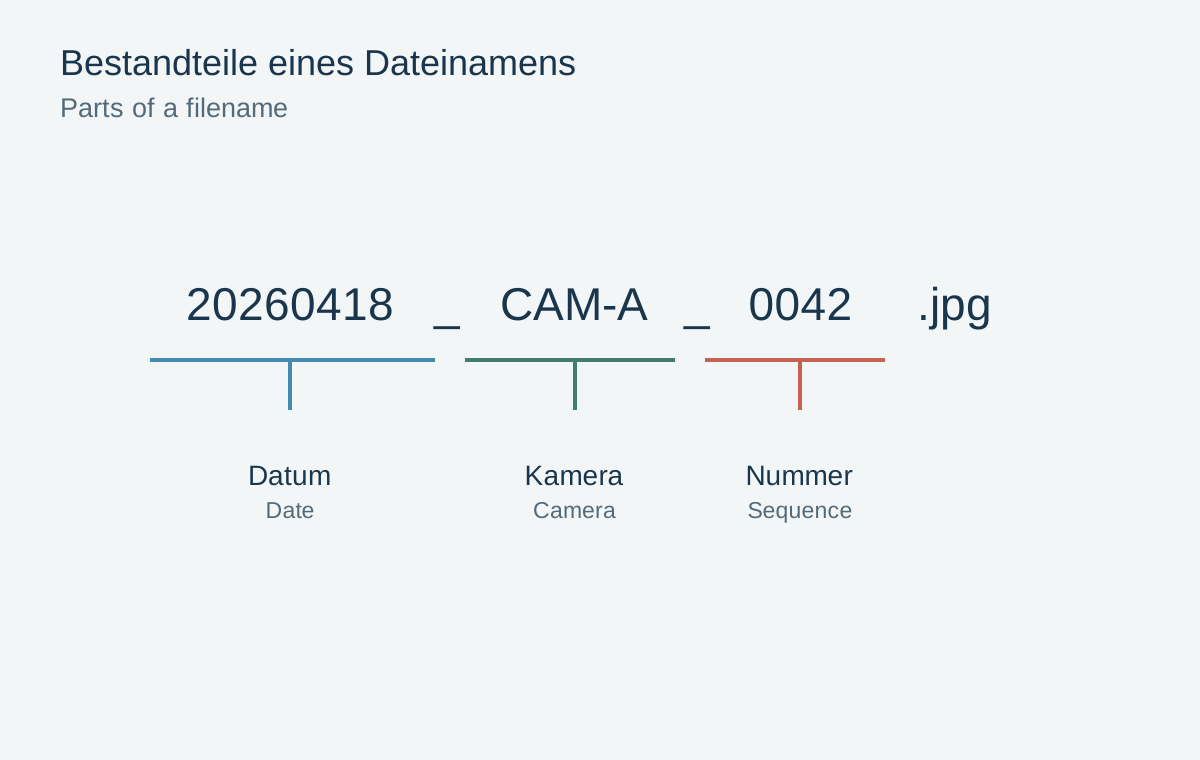
A pattern such as 2026-06-12_A_0042 combines capture date, camera identifier and sequence number. The camera identifier is useful when two devices were used at the same event. Leading zeros prevent an alphabetical sort from presenting 1, 10 and 2 as the apparent sequence.
A short project term can help if you often search outside the photo manager. The names of everyone pictured usually belong in descriptive metadata instead. Long filenames become cumbersome when sharing and can disclose personal information that is not apparent in the image itself.
Use a small number of predictable separators and avoid characters that the destination system cannot accept. Test a new rule on copies of several file types first. The extension identifies the format and should not accidentally be removed or replaced with an invented label.
Rename related files together
RAW and JPEG versions of the same capture can share a base name with different extensions. An associated XMP file also needs the correct relationship. Rather than renaming only the visible preview, check which companion files the application manages.
Lightroom Classic provides naming templates for import and export as well as existing photographs. For images already in a catalog, renaming within the application maintains the catalog connection. Renaming afterward in a file manager may require the files to be located again.
Make versions recognizable
Label outputs according to their purpose, such as _web or _print-20x30. This explains more than _new or _final2. The original retains its stable name while new outputs become recognizable variants.
After a batch rename, check the file count and several original-and-sidecar pairs. For a large archive, also retain a mapping between old and new names. Older order lists or notes then remain understandable without having to reverse the new naming scheme.