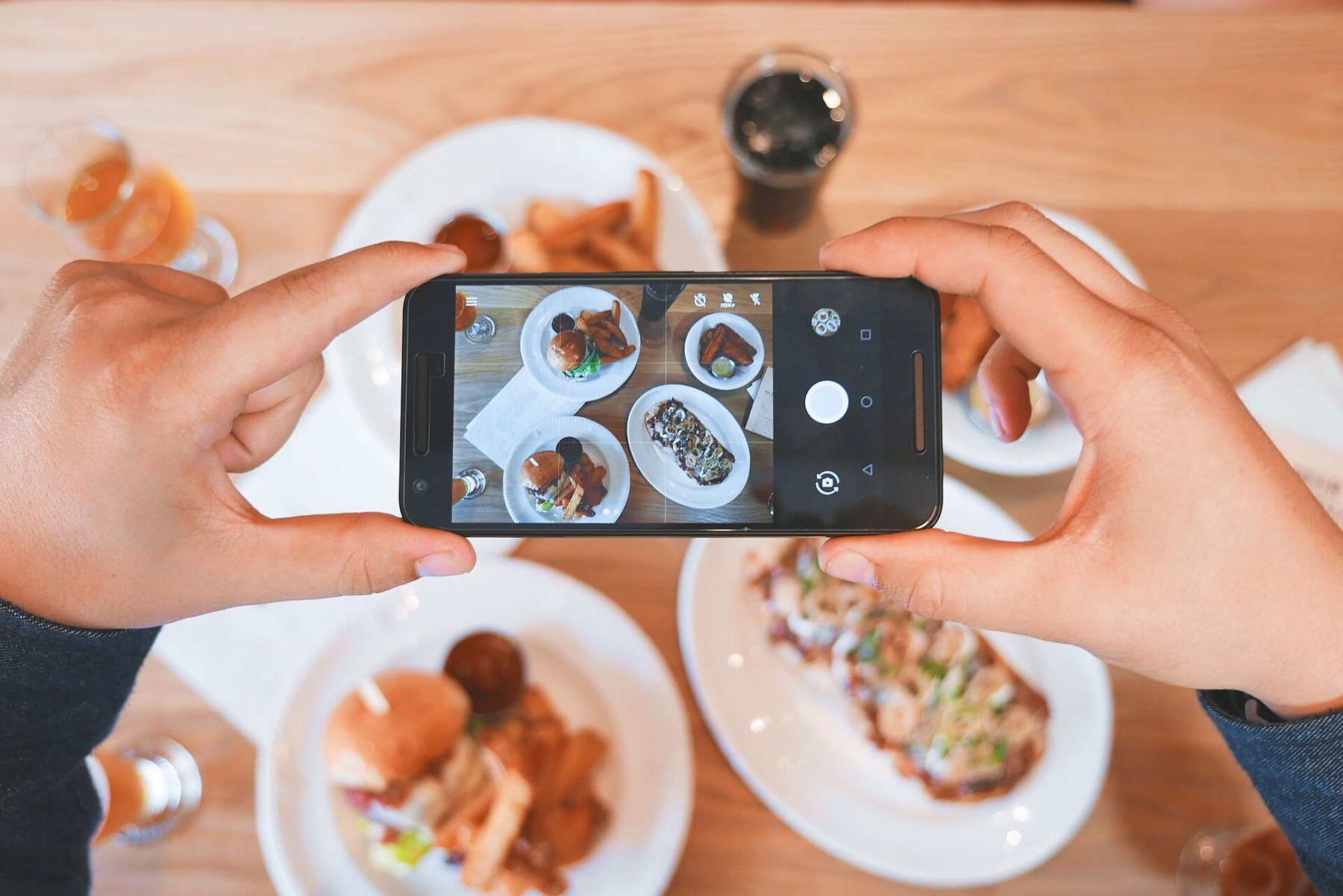
A flat plate with several ingredients calls for a different viewpoint from a tall burger or a glass with visible layers. The shape of the food should therefore guide the camera position first. A dedicated mode can change the rendering, but it cannot decide which part of the dish deserves to be shown.
Compare three viewpoints briefly
For an unfamiliar arrangement, make quick pictures from above, at an angle and near plate height. The overhead view emphasizes arrangement and colour. An angled view adds height and surface detail. A very low position can emphasize layers but hide ingredients farther back. Choose according to those differences instead of using the same angle for every dish.
Do not bring the main camera so close that the front of the plate looks enormous. Move back slightly and leave room around the edges initially. Crop carefully afterwards if necessary. Check cutlery and glasses too: an accidentally cut-off object can look untidy, while a deliberately tight crop can emphasize the food.
Let light describe the surface
Place the plate beside a window. Notice the small shadows around herbs, crusts and cut vegetables; they describe texture. Light coming directly from the phone’s direction can flatten that effect. If one side becomes too dark, a pale napkin or white card outside the frame can provide simple fill.
Glossy sauces and glass respond strongly to bright reflections. Rotate the plate slowly until a reflection describes its shape without becoming a large white patch. Avoid strong mixtures of window light and warm ceiling lamps. A white plate provides a useful reference, but it need not look perfectly neutral under every restaurant light. Preserve the actual atmosphere without making orange food unnaturally stronger.
Compare the mode with its result
A Food mode may alter colour and blur; available controls depend on the device. Make another photograph in the ordinary photo mode. If artificial blur is applied, inspect fine fork prongs, glass edges and herbs. It should not erase important parts of the food by mistake.
Prepare the arrangement before the hot dish reaches the table where possible. Steam and a fresh surface change quickly. Small brightness and crop adjustments are often sufficient afterwards. Compare the finished picture with the dish: if red tomatoes glow without detail or white sauce looks grey, reduce the adjustments.