A photo book is more than a folder of strong individual images. Sequence determines the connections readers make. An overview can explain a place before details appear, while a quiet photograph can provide a pause after a busy scene. Begin with selection and order before decorating every page extensively.
Choose a simple organizing idea
A chronological order may suit a trip, but need not give every day equal space. A family history may be organized around people or recurring places. Decide what orientation the reader needs and keep it recognizable. An unexplained switch between chronology and themes can confuse.
Arrange small previews first. Identify an opening, several central moments and a closing image. Remove near duplicates unless they show development. Five similar sunsets often say less than a landscape, a person and a detail from the same occasion.
Treat spreads as shared spaces
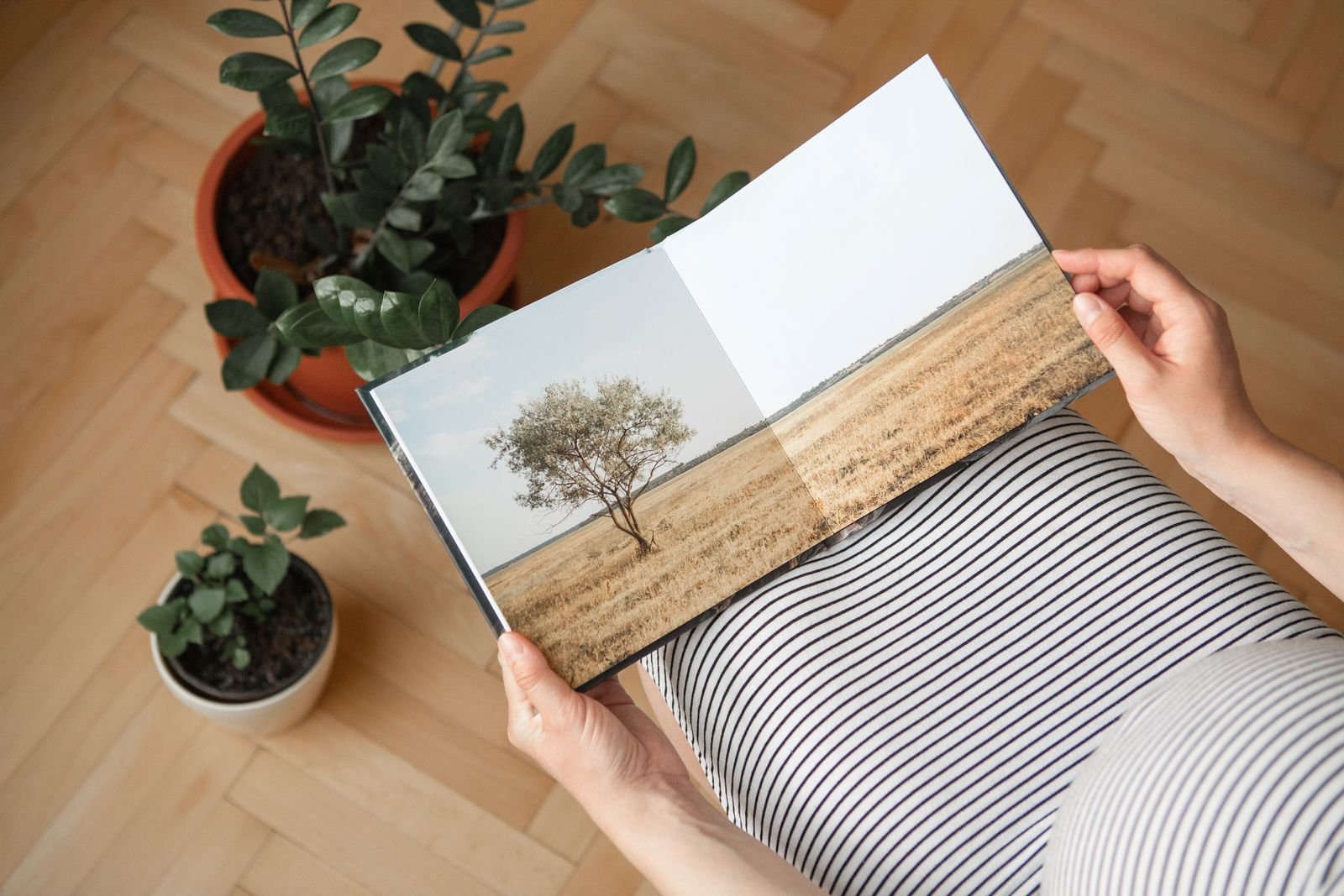
Facing pages are usually seen together. Check whether their pictures complement each other or compete. One large photograph beside several small ones can create clear emphasis. Two equally strong but unrelated pictures may instead imply an unintended connection.
Vary distance deliberately. A small detail after a wide establishing view can direct attention. After several dense spreads, a single photograph may deserve room. These pauses do not require obligatory blank pages; they emerge from the rhythm of the actual selection.
Use text for missing information
A short place or date can become more valuable than a decorative heading. Identify people and events when that knowledge might otherwise disappear. Avoid captions that merely describe what is already obvious. Check names and dates independently of the layout.
Place text consistently enough to be found, but do not force every page into an identical grid. A longer recollection may need a quieter page of its own. Use readable type and adequate distance from trim edges and the gutter.
Review it as a book
Read the entire preview in sequence without immediately editing each photograph. Note confusing transitions and unnecessary repetition. Then inspect small pictures, captions and any page numbers at actual size.
Leave the sequence for a while and revisit it. A strong individual image may be omitted if it does not support this story. Keep it in the archive nevertheless: selecting for one book does not judge the value of the entire collection.