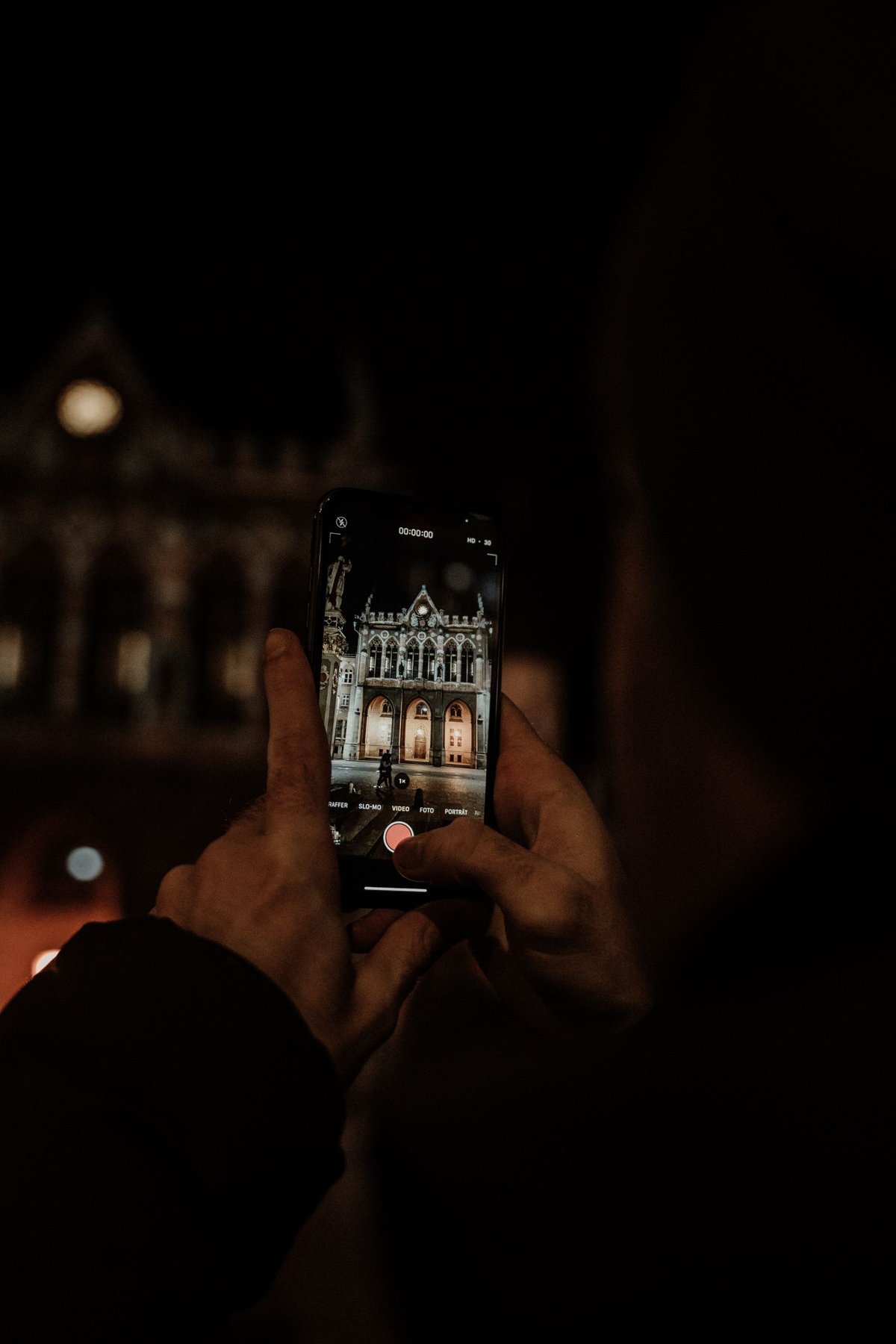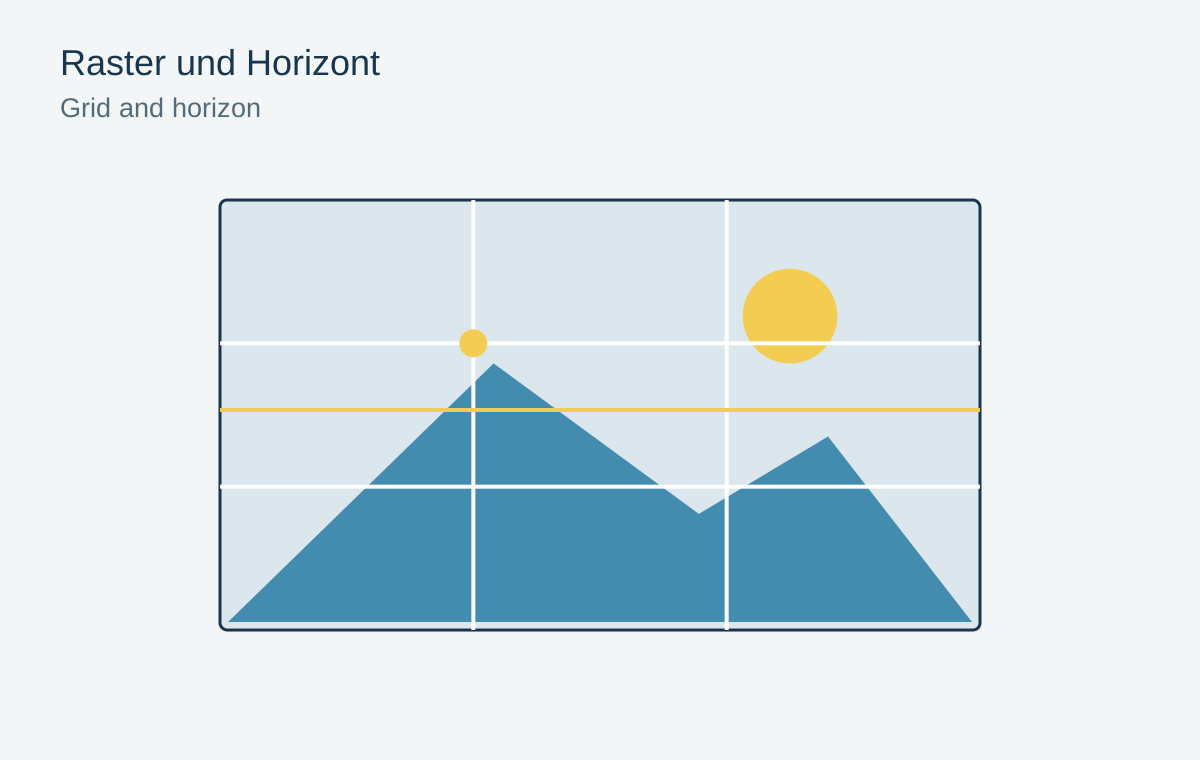
The lines over the camera preview do not appear in the photograph. They provide references while you hold the phone. A grid can reveal a tilted sea horizon or show that someone is accidentally pressed against the edge. It does not decide where the subject must go: a centred, symmetrical picture can work just as well as an off-centre composition.
Find a reliable reference
Enable the grid in your camera app settings. Some phones also offer a level indicator. For a coastal scene, align a horizontal grid line with the distant water horizon. A climbing road or a sloping roof edge is not a reliable horizon reference. Check whether the edge you chose really is horizontal in the scene.
Vertical lines help when photographing a doorway straight on. If you tilt the phone upward, the sides of the doorway can still converge. That is perspective, which rotating the phone alone cannot remove. Move to a suitable height and keep the device parallel to the surface when you want a straightforward record.
Thirds as a comparison, not a rule
A common grid divides the frame into nine rectangles. In a landscape, first try a low horizon that gives the sky plenty of room. Then move it higher to give the foreground more emphasis. Compare the pictures afterwards: which area actually contains the interesting information? Let the scene answer that question rather than a mathematical ideal.
For someone looking left, some empty space on the left can accommodate the direction of their gaze. If an important object stands on the right, however, another arrangement may make more sense. Use the lines to notice these relationships rather than forcing every pair of eyes onto an intersection.
Check the edges before pressing the shutter
Finally, look around the whole frame. Is a foot cut off, does a sign emerge behind somebody’s head, or is there only a tiny strip of sky? Small changes in your position often solve these problems more effectively than cropping later. Leave some room around important subjects for subsequent straightening.
A grid can also distract. Turn it off occasionally if you find yourself seeing lines rather than expressions. With moving subjects, the right moment often matters more than millimetre-perfect alignment.