A stabilized lens or camera body can render a stationary scene more sharply at a longer exposure. That helps in a church or when photographing an immobile detail. It does not make your hands perfectly motionless or stop a walking person. The question is therefore not only whether stabilization is enabled, but which movement threatens the photograph.
Lens elements and sensors move deliberately
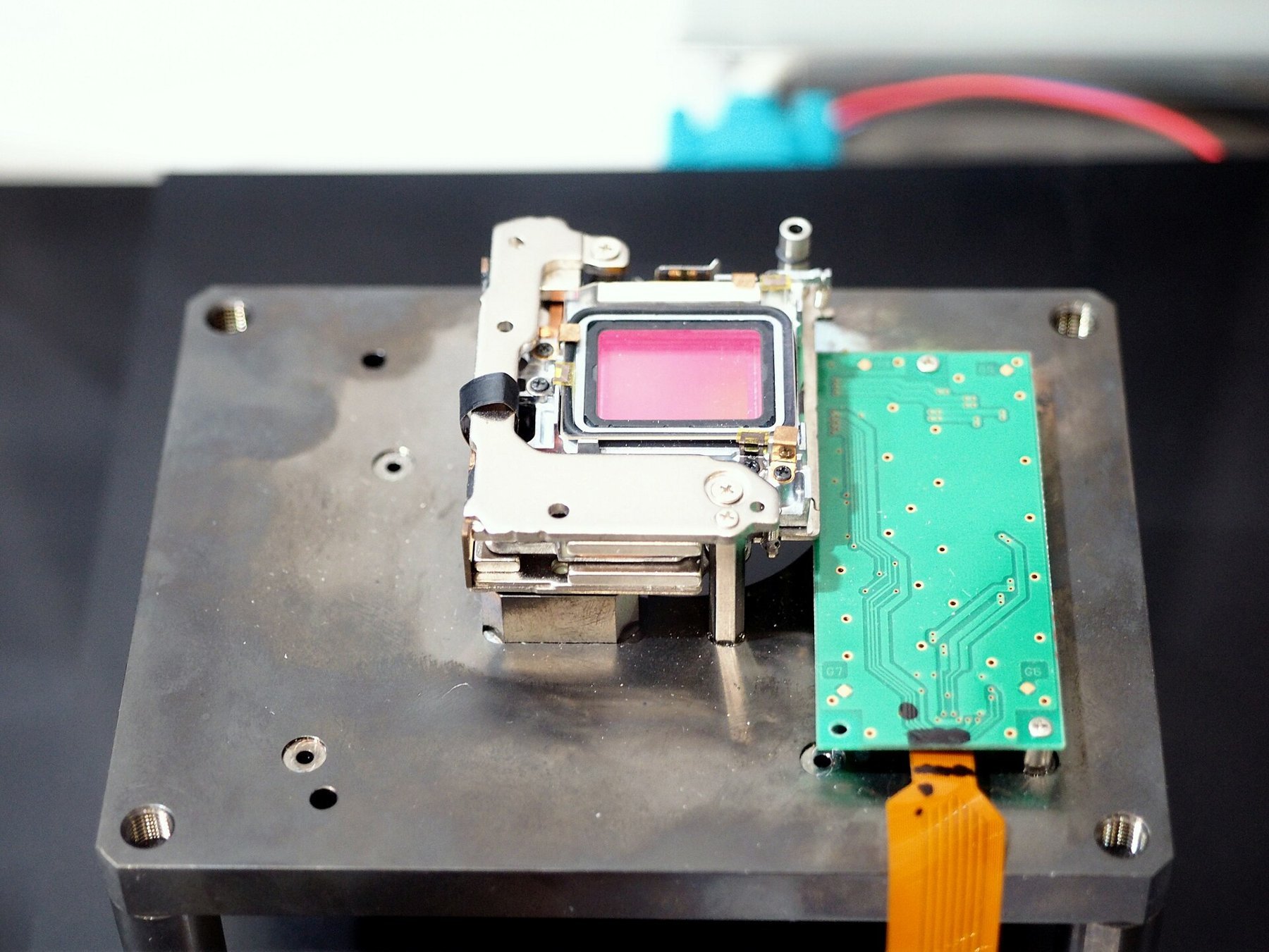
Optical systems shift suitable lens groups or the sensor to compensate for detected camera movement. Some combinations coordinate both methods. Supported movement axes and operating modes depend on the camera and lens. Check the actual combination rather than assuming a body’s performance applies equally to every attached lens.
A rating in exposure stops describes a comparison under defined test conditions. Four stops mathematically correspond to sixteen times the exposure duration, but that does not mean every photograph will succeed at that time. Focal length, distance, handling and required sharpness influence the result. Strong screen magnification can reveal residual movement that remains unobtrusive in a small print.
Find your own working limit
Photograph a stationary subject at several exposure times, taking several frames at each. Compare, for example, 1/125, 1/60, 1/30 and 1/15 second at the same focal length. Do not select only the single best frame; consider the proportion of usable results. A time that works once and fails five times is not dependable for an important moment.
Support your elbows, hold the camera steadily and release without a sudden jab. With a long telephoto, a monopod or firm support can complement stabilization. Moving people still require a sufficiently short exposure. If only hands or feet smear, stronger stabilization does not solve the actual problem.
Check tripod and panning behaviour separately
Tripod recommendations differ between systems. Some detect the stable support; others require particular functions to be disabled. Follow the instructions for your combination. Panning may have a dedicated mode that accommodates intentional movement in one direction. A blanket “always on” or “always off” is less useful than a documented comparison under your actual conditions.