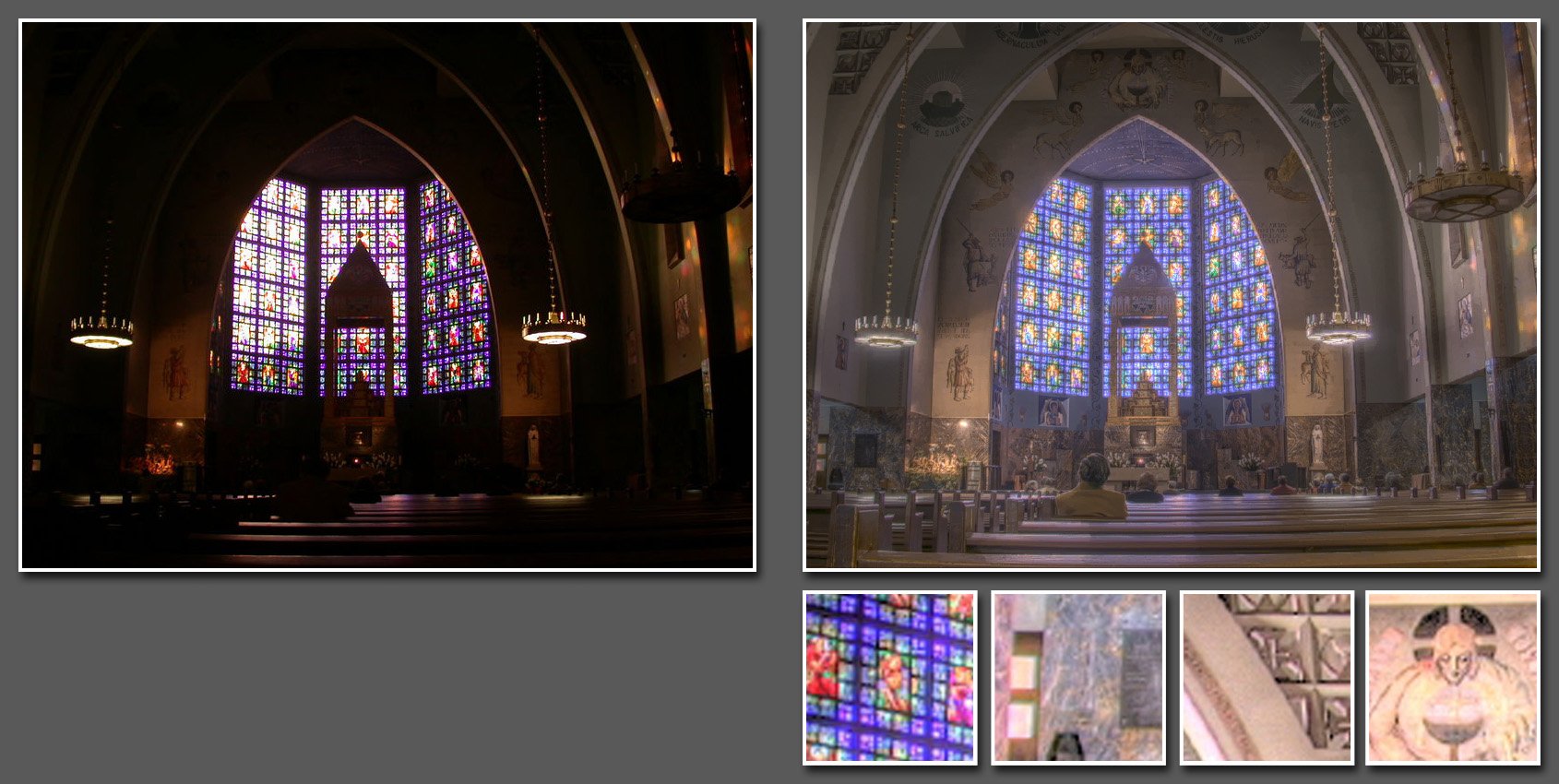
Your eyes recognize furniture in a room and clouds outside the window, but the photograph shows either a dark room or a white window. The scene contains a large brightness difference. The camera can record only a limited range between usable shadows and saturated highlights. Changing exposure shifts which part of that range is retained; it does not reduce the scene’s contrast.
Separate scene, capture and display
A scene’s dynamic range describes its brightness span. A camera’s usable dynamic range describes how much it can capture at sufficient quality under particular conditions. A screen or print reproduces another range again. These three levels are not identical. A high-contrast subject may contain more gradation in its RAW file than the initial JPEG preview reveals.
During editing, recorded tones are mapped into the output range. You can render shadows brighter and highlights darker to reveal more content. That also changes the spatial impression of the light. If every corner becomes equally bright, an originally sunny room may look flat. More visible detail does not always produce a more convincing photograph.
Identify important highlights
Check which bright areas need texture. Clouds, a white dress or a pale product surface deserve different treatment from the core of a lamp. A tiny reflection can often remain white. If you darken the whole subject strongly because of that reflection, you may degrade more important shadows without a visible benefit.
Use the histogram and highlight warning, but inspect the subject too. The display usually relies on a processed preview. It therefore provides guidance rather than an exact guarantee of RAW reserves. Test your camera’s limits with a repeatable scene instead of trusting a universal number of supposedly recoverable stops during an unrepeatable photograph.
Reduce contrast before capture
For the room example, photograph at a time when the exterior is less bright. Another camera angle can remove the window from the frame. A reflector or extra light can lift dark subject areas. Such measures bring the scene closer to the recordable range instead of requiring heavy stretching of stored values afterwards.
For a stationary scene, an exposure bracket offers another option. A darker frame preserves highlights and a brighter frame preserves shadows. Later merging must account for movement: curtains, leaves or people can create doubled outlines. Even an automatic HDR function therefore needs inspection, especially around edges and moving areas.
Two window photographs with different goals
In a room photograph, the outside view may need to remain recognizable. First expose to retain important clouds or buildings in the window and inspect how dark the room becomes. If lifting shadows produces strong blotches or colour errors, the scene exceeds the capture performance useful for that purpose. A later time, another angle or additional room lighting can improve the relationship before you merge multiple exposures.
In a portrait beside the same window, the view may be unimportant. A brighter window can then be acceptable if the face is well represented. The sensor has not suddenly become more capable; you have prioritized different information. That is why a blanket ban on clipped highlights is unhelpful. What matters is whether the lost information is needed for the intended image.
Compare both versions at the same output size. A heavily lifted dark corner may look conspicuous on a large screen but matter little in a small overall view. Conversely, a clipped window in an interior record may conceal an essential feature. The acceptable limit comes from subject, use and intended impression, not just a technical measurement.
Do not lift shadows without limits
When a dark area contains little usable signal, strong brightening reveals noise, colour blotches or banding. Denoising can smooth the appearance but cannot reconstruct every original texture. Inspect fine materials and transitions after adjustment. Preserve a natural brightness order: a shaded corner can remain darker than the window side.
For a series, consistent handling of these tones matters more than maximum brightening in every individual frame. Compare adjacent photographs side by side. If one room suddenly looks brighter and flatter than all the others, the local rescue may not fit the overall presentation. A deliberate limit preserves both credibility and visual calm.



.jpg)
